
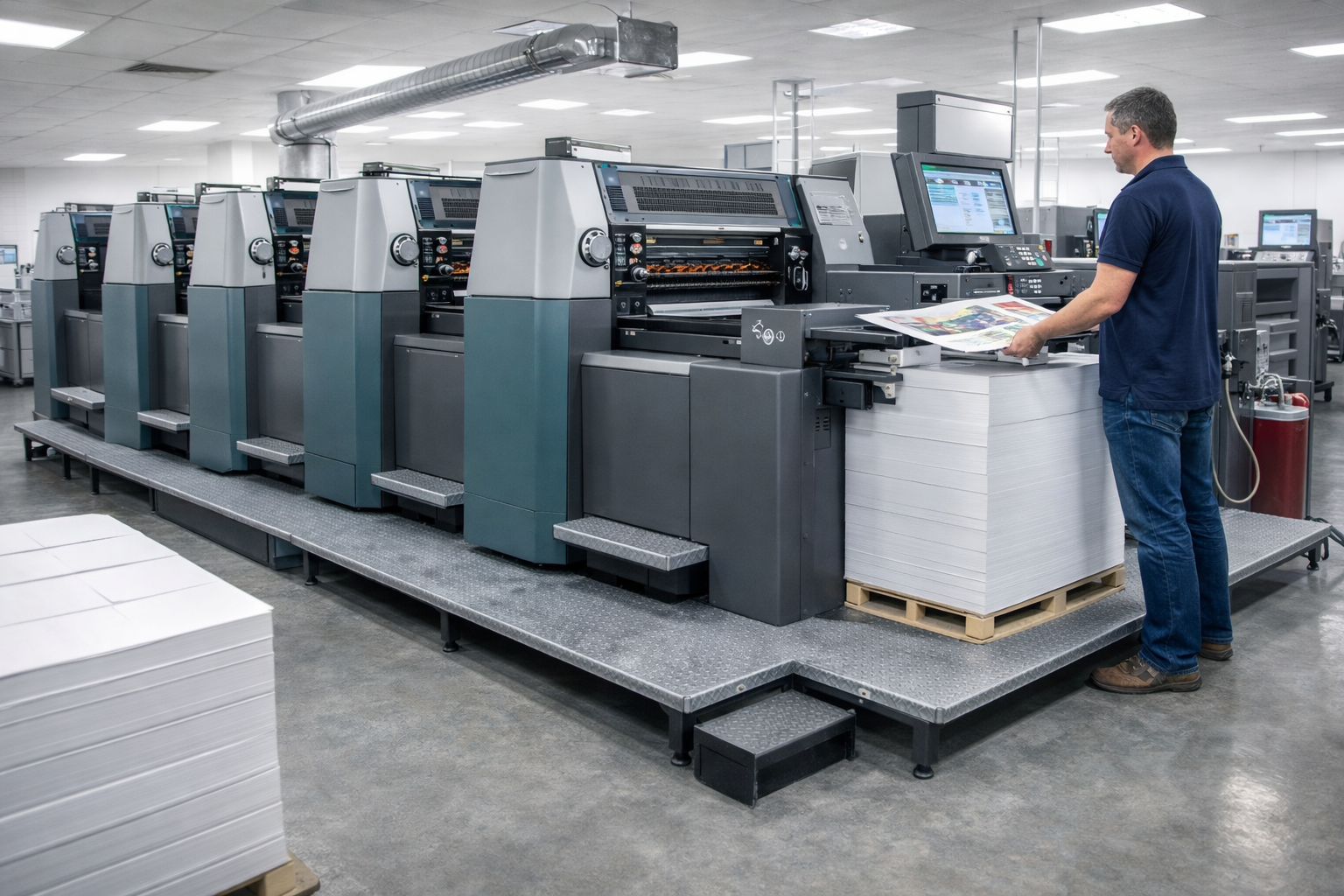
The Thriving Offset Printing Industry
Offset printing remains one of the most trusted and widely used printing methods in Malaysia—especially for businesses that demand consistent quality, sharp details, and cost efficiency at scale. As technology and production standards evolve, the offset sector continues to stay relevant by combining reliability with smarter, more sustainable workflows.
The Evolution of Offset Printing in Malaysia
Offset printing has long played a key role in Malaysia’s print landscape, supporting high-volume production for commercial and industrial needs. Over the years, the industry has transitioned from heavily manual processes to more modern, automated systems—improving speed, accuracy, and overall output consistency.
With better machinery, streamlined production planning, and stronger quality control, offset printing today delivers professional results across a wide range of applications, while remaining highly competitive for large print runs.
Current Trends in the Offset Printing Industry
1) Smarter Technology & Workflow Integration
Many printers are adopting advanced setups such as computer-to-plate (CTP), improved press controls, and workflow automation. This helps reduce setup time, minimize errors, and increase production efficiency—especially for tight deadlines and bulk orders.
2) Stronger Sustainability Practices
Environmental responsibility is becoming a bigger focus. More offset facilities are improving waste management, choosing more eco-conscious materials where possible, and optimizing processes to reduce energy usage—without compromising quality.
3) Premium Output & Color Consistency
Offset printing is known for producing crisp text, clean gradients, and stable color reproduction—making it ideal for high-end materials such as brochures, packaging, catalogs, magazines, and corporate print collateral.
4) More Flexibility Than Before
While offset is traditionally linked to large-volume printing, modern production systems have improved flexibility—allowing printers to handle a wider range of requirements while still maintaining efficiency.
5) Expanded Services Beyond “Just Printing”
To stay competitive, many companies now offer end-to-end solutions—combining printing with design support, finishing, and packaging services. This creates a smoother experience for clients who prefer a one-stop print partner.
Future Prospects of the Offset Printing Industry
The outlook for offset printing in Malaysia remains positive—driven by steady demand for high-quality printed materials and continued progress in production technology.
1) Ongoing Technological Improvements
Further advancements in press efficiency, automation, and quality control will strengthen productivity and consistency, keeping offset highly relevant for large-scale printing.
2) Continued Market Demand
Industries such as education, publishing, retail, packaging, and advertising continue to rely on offset printing for its balance of quality and scalability—supporting long-term demand.
3) Greater Focus on Sustainability
Sustainability will become an even stronger differentiator. Companies that invest in responsible materials and cleaner production practices are likely to win more trust from modern customers.
4) Workforce Skills & Capability Growth
As equipment and workflows become more advanced, the need for skilled operators and production specialists will increase—making training and capability-building a key factor for industry success.
Conclusion
Offset printing continues to be a cornerstone of Malaysia’s printing industry. With its proven ability to deliver high-quality results, strong consistency, and cost-effective production at scale, it remains a reliable solution for businesses that require premium print output. As technology and sustainability efforts advance, the offset sector is well positioned to keep growing and adapting to changing market needs.